Steve Vickers, who tirelessly chronicled the history of the marching music activity as publisher of Drum Corps World magazine (DCW) for more than 50 years, died September 24. He was 77.
Vickers had been in declining health for several years before entering hospice care. His death was confirmed by Sky Ryders executive director Dale Antoine via information provided by Vickers’ sister, Susan.
“Drum Corps World is the institutional memory of drum corps in all its glorious history and through its exciting change over the years,” former Drum Corps World staff writer Christopher L. Atkinson wrote in a letter supporting Vickers’ nomination into the DCI Hall of Fame. “Vickers is one of the activity’s best ties to its past — he is, by all accounts, a walking encyclopedia of drum corps.”
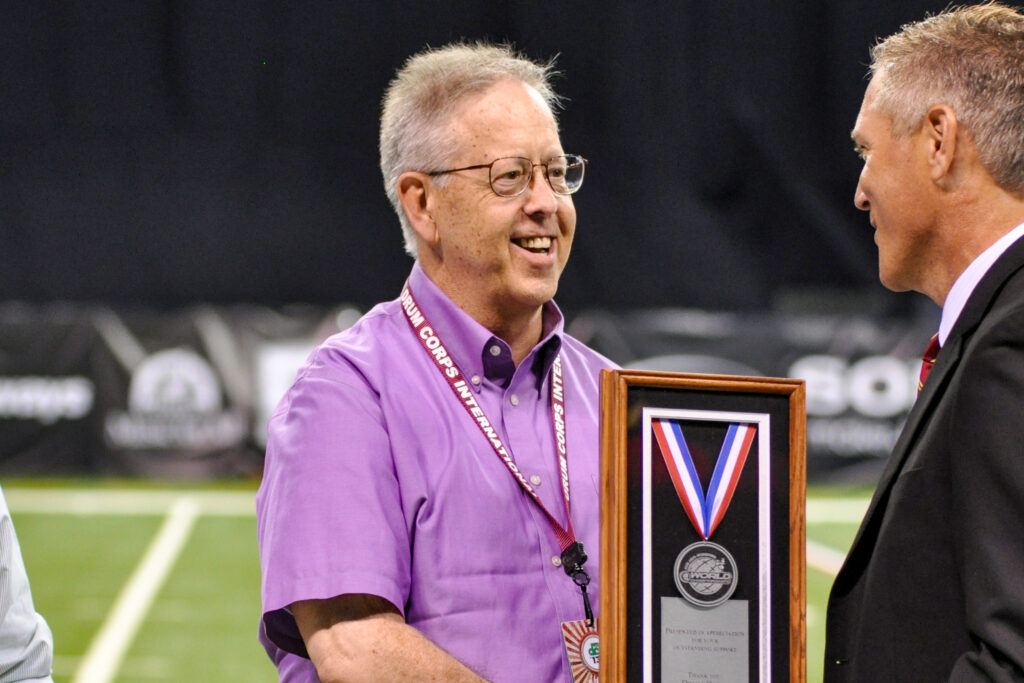
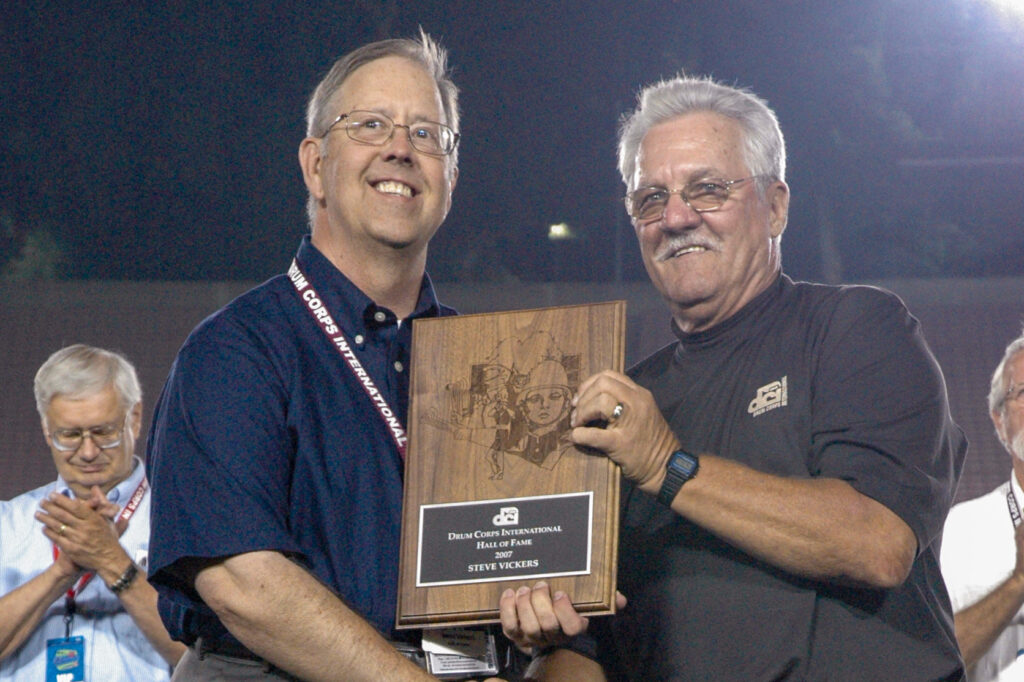
Inducted into the DCI Hall of Fame in 2007, Vickers wrote the first pages of his own drum corps history in 1961 as a member of the Jets, a feeder corps to the Sky Ryders in his hometown of Hutchinson, Kansas.
“My first [drum corps] memory was actually before I joined the Jets,” Vickers recalled during his DCI Hall of Fame induction speech. “The Sky Ryders practiced at the Kansas State Fairgrounds behind my house at six o’clock in the morning almost every day during the summer.”
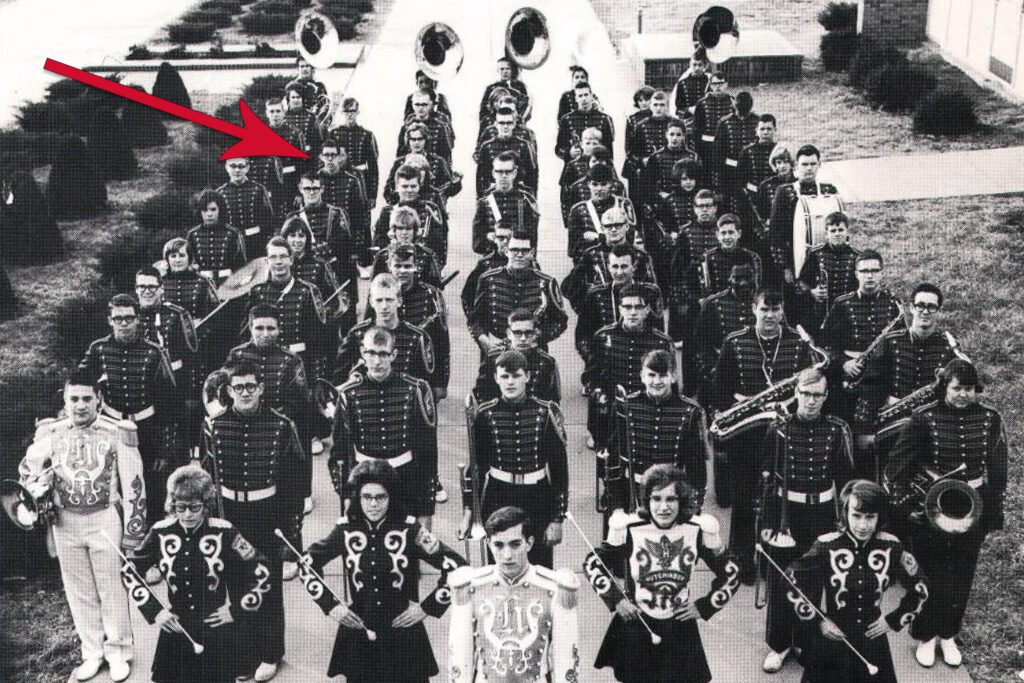
Originally a high school woodwind player, Vickers played mellophone during his marching career with the Sky Ryders from 1967 to 1970. He went on to study journalism at the University of Kansas, keeping his ties to the activity intact while writing for Drum Corps Digest. There, he established himself as a reliable source of Great Plains drum corps news for Don Whiteley, a DCI Hall of Fame member who brought Vickers on as editor of Drum Corps World in July of 1973 before selling the publication to him a year later.
Vickers outlined a bold vision for the independent outlet in the July 12, 1974 issue, his first as owner and publisher, writing:
[The new DCW] will be something that no other drum corps periodical has ever been ... a literal trade journal of the drum and bugle corps movement … What is produced henceforth will hopefully change your image of DCW from a ‘sometime’ newspaper to a first class ‘everything-you-want-in-a-drum-corps-periodical’ magazine.
Under his leadership, Vickers assembled an international network of writers and photographers to deliver year-round coverage of the activity. He coordinated a largely volunteer staff in an era before the internet, maintaining steady publishing operations even as other drum corps publications faded away.
Before websites and social media, generations of marching members passed physical copies of Drum Corps World down bus aisles across the country to track scores and follow distant rivals.
“Hardly a corps bus goes by that doesn’t have a copy open in some seat or other, an article pasted in the window or some discussion about a show report or a score update,” wrote DCW staff member Stefanie Kressaty in her nomination of Vickers to the DCI Hall of Fame. “Steve Vickers helped us stay connected and gave us a common thread to hold onto whether we were 3,500 miles away or six months away from the next show. In this way, he helped us all become more solidly rooted in our past while documenting the present and working toward a bright future of drum corps.”
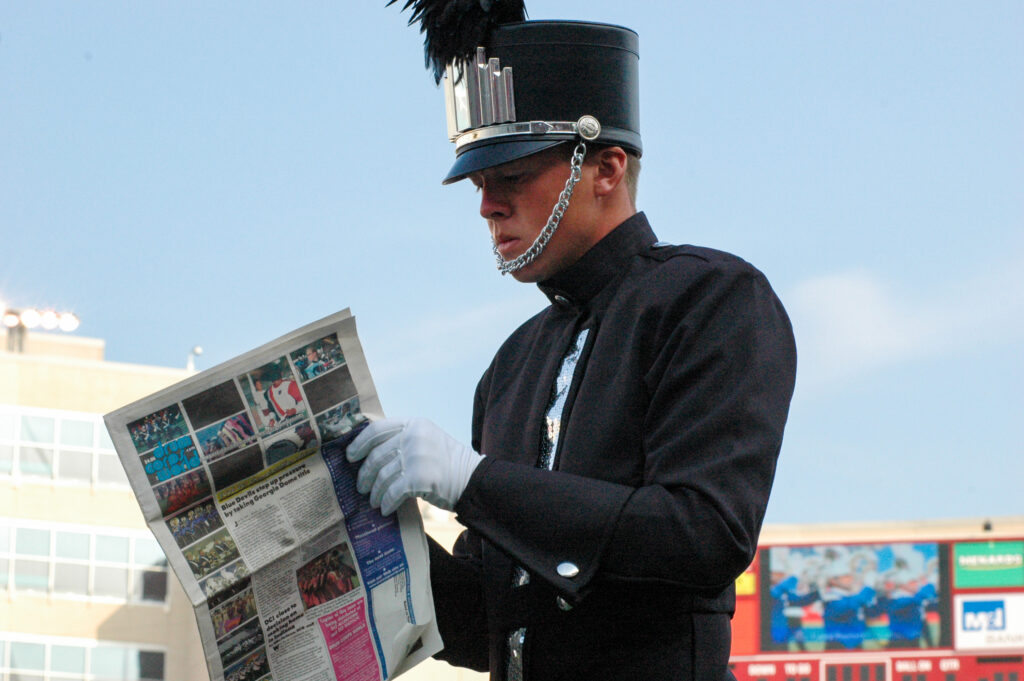
“We aligned ourselves with his vision of preserving drum corps history. And not just show reviews, but a variety of interviews and insight that made it engaging,” added Christina Mavroudis who has been a DCW staff writer since 1990. “He devoted his life to drum corps – all its growth and turmoil, its celebrations and achievements. Steve was always there coordinating coverage, ready to preserve the history of our eclectic interest.”
Beyond reporting current news, Vickers became one of the activity’s primary historians, dedicating much of his career to archiving its past. By his count in the early 2000s he had amassed a collection of some 3,000 drum corps related publications back to the 1940s, 10,000 photographs, 300 corps booster buttons and a host of other artwork, video and audio recordings. He spearheaded major historical projects, including the two-volume hardcover set “A History of Drum & Bugle Corps” in the early 2000s and “Drum Corps International: The First Decade,” which documented DCI’s foundational years.
Vickers also preserved pre-DCI audio recordings — listing mail-order options in the back of Drum Corps World in the style of the Columbia House music club — and facilitated the digital restoration of footage from the 1972 and 1973 DCI Championships from home movie footage recorded before professional crews began broadcasting the event. More recently he had been involved with the online DCX Museum and Marching Pageantry Arts Experience.
Often described as opinionated, and never shy about expressing those opinions, Vickers remained dedicated to covering the entire breadth of the drum corps activity no matter how large or small, new or old the corps was on the field.
“Oftentimes I would lobby Steve to reduce the amount of coverage corps not in the Top 17 received in the publication, only to be sternly reminded that DCW was a publication about ALL corps, not just Division I,” former Drum Corps World editor Steve Powers wrote in his nomination of Vickers to the DCI Hall of Fame. “Although focusing coverage on the powerhouse corps certainly would have increased the publication’s subscriber base, Steve was steadfast in his belief and still is today.”
It was that same philosophy — ensuring every corps had a voice and a platform — that led Vickers to form the 21st Century Drum Corps Foundation in 1999. The organization provided loaner equipment and administrative guidance to help fledgling groups establish themselves and stay solvent.
Even after relocating to Madison, Wisconsin, where he long served on the board of the Madison Scouts and chaired local DCI World Championship host committees, Vickers never lost touch with his Kansas roots or the corps that gave him his start. He annually hosted a Christmas gathering for local Sky Ryders alumni in Hutchinson and secured ticket blocks for former members to attend the DCI World Championships together each summer.

When discussions began in 2022 to bring the Sky Ryders back to life after nearly three decades of inactivity, Vickers was one of the key figures who met to turn the concept into reality.
Vickers joined the organization’s initial board of directors, leveraging Drum Corps World to publicize the group’s return. His guidance helped steer the Sky Ryders through their revival as a DCI SoundSport ensemble and what is poised to be their subsequent return to the field in Open Class competition.
“He was very instrumental in getting us off the ground and to where we are now,” current Sky Ryders executive director Dale Antoine said. “One of his passions was to bring the corps back. He put a lot of time and effort into the activity, and it’s just a huge loss for us and for the entire drum corps community.”
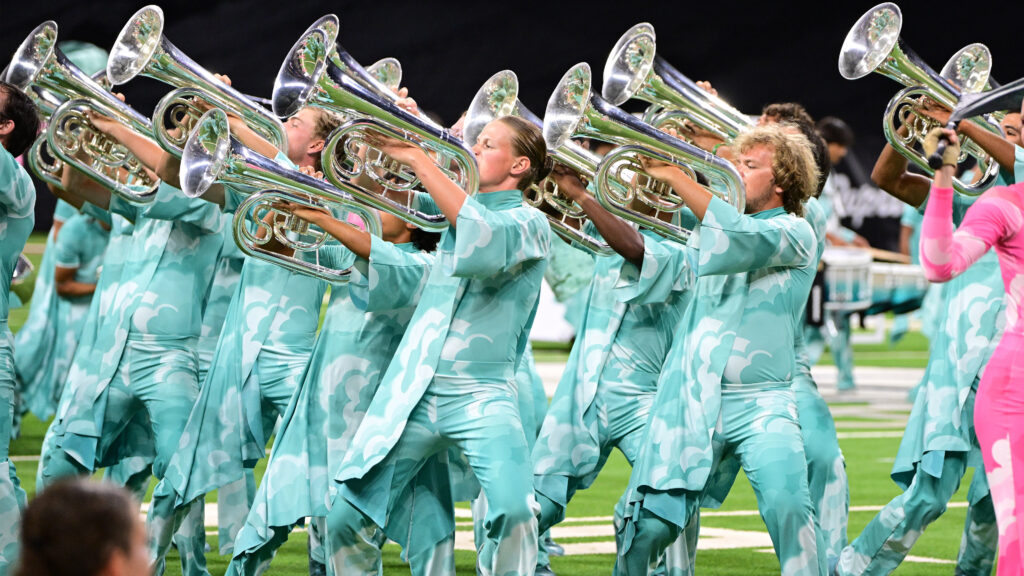
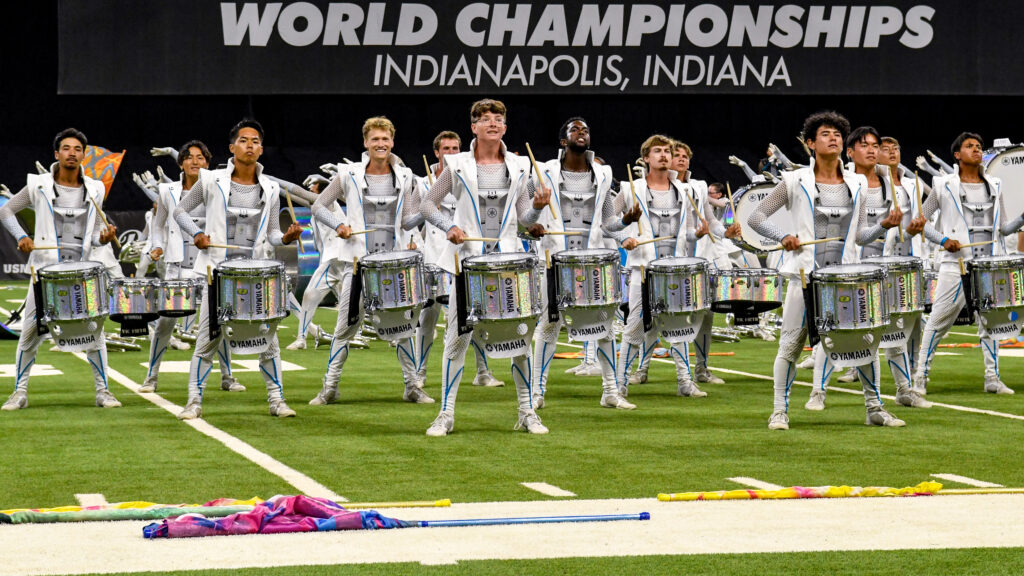
That devotion to every level of the activity remained visible until the very end. At the DCI World Championships this past August, Vickers was back in the stands doing what he had done for decades.
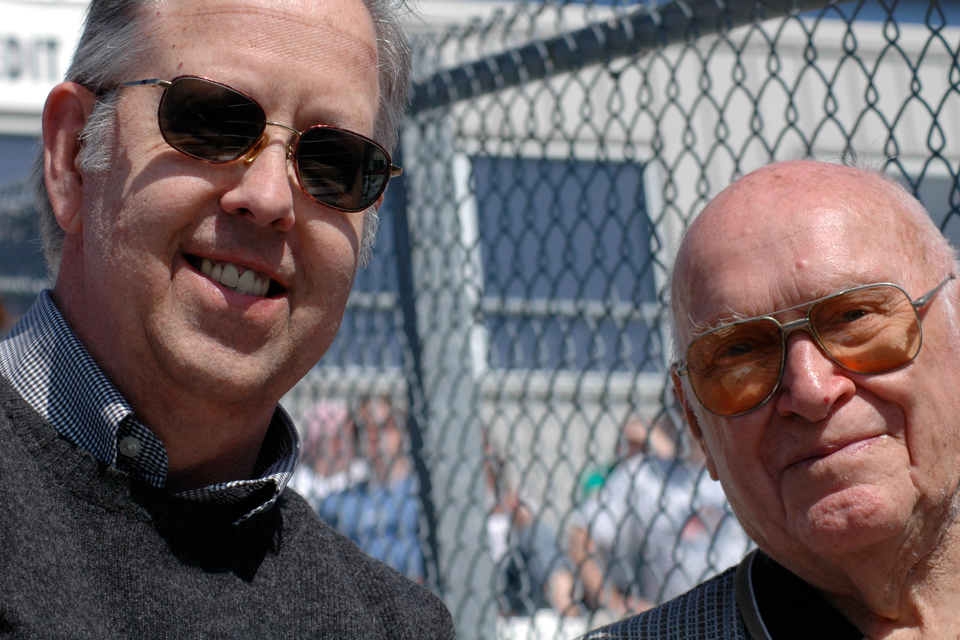
“Steve was a huge supporter of all levels of the activity,” Antoine said. “When he went to Championships, he would watch every show — every Open Class show, every World Class show, everything. He didn’t come like a lot of people just for the last 12 corps. Steve sat there the whole day and watched every single corps.”
To those who watched him navigate every facet of the marching arts over more than six decades, Vickers’ legacy was defined as much by his versatility as his longevity. A lifetime spent as a performer, journalist, editor, publisher, board member, show promoter, historian and advocate.
“Without his influence, passion, determination and integrity,” wrote DCW staff member Stefanie Kressaty in Vickers’ Hall of Fame nomination, “the drum corps world would have been a very bleak place, indeed.”