
Jim Casella
When you think about percussion excellence, most drum sticks ultimately point to Santa Clara, California. Drum Corps International’s highest percussion honor is called the Fred Sanford Award, after all. Walking in the footsteps of one of DCI’s legendary writers and teachers is no small challenge. Jim Casella was up to the task.
A west coast kid, Casella cut his teeth in the Santa Clara bass drum line from 1989 to 1991. Corps leaders knew he had something special. After “aging out” as a performer, he took over as the Cadet corps percussion caption head between 1991 and 1993. By 1994 he was a front ensemble staff member with the “A” corps. In 1996 Casella became the caption head and arranger, a post held through 2004. His tenure saw Vanguard win two Sanford caption awards and a World Championship title.
“During his time at Santa Clara Vanguard, Jim became known as an innovative percussion arranger who emphasized musicality, melodic drum writing, and tightly woven blending of the full ensemble,” Vanguard alum Charlie Iwanaga said. “Jim developed his own unique voice in marching percussion as one of the few DCI percussion arrangers in DCI writing the full percussion score for both the battery and front ensemble.”
Casella’s compositions for Santa Clara Vanguard are described by University of Delaware music professor Jim Ancona as ones that “forced people to listen.” “He brought a new level of artistry to marching percussion. His unique rhythmic vocabulary had a more organic and fresh sound,” Ancona continued. “His writing required performers to have a vast skill set. From the lightest and most musical touch to ultra-athletic chops, these players covered the entire musical spectrum.”
Casella went on to arrange for The Cavaliers (2006-2009) before retiring from “full-time” drum corps work.
But that’s just part of Casella’s story in the music industry. In 1998, he co-founded Tapspace with fellow Santa Clara Vanguard staff member Murray Gussek, which has grown into one of the world’s leading percussion music publishers. He also developed and produced Virtual Drumline, a widely used sample library across the music industry. Casella’s compositions have been heard in commercials and movies and his mallet line with Innovative Percussion was the first-ever signature series for marching percussion.
It takes a certain kind of person to make it in music and business. Ancona says Casella is that kind of guy. “When people ask me about Jim Casella my immediate response is that Jim is a great human,” Ancona said. “He is easy-going, easy to talk to, intelligent, creative, and a pleasure to work with. With his quiet demeanor, he still knows how to get the job done, how to get the best from his students and staff, and how to achieve excellence. He is, at heart, an artistic and creative person, but still a driven competitor and motivator.”

April Gilligan-Martinez
April Gilligan-Martinez stands as a foundational architect of the modern color guard era. From her beginnings as a disciplined performer to her tenure as a transformative educator, she redefined the standards of The Cadets’ visual identity. Her career is defined not only by a historic collection of championship titles, but also by an unwavering dedication to the personal growth of every student under her tutelage.
Described by her colleagues as a true “force of nature,” April’s career represents a rare fusion of competitive dominance and compassionate mentorship. Her commitment to excellence started in her days as a member of The Cadets, says DCI Hall of Famer Marc Sylvester. “I first met April in the winter of 1981 when George Zingali, Peggy Twiggs, and I began working with the Garfield Cadets,” Sylvester said. “Even among a sea of loud, proud, big-haired Jersey girls, April stood out. She was relentless in her work ethic, unwavering in her commitment to excellence, and a sheer joy to teach. She was not simply talented — she was driven, disciplined, and deeply invested in becoming great.”
After “aging out” of the corps in 1988, April applied that drive to instructing. With the exception of a one-year break, she would be with The Cadets’ guard staff through 2012, helping to break new ground and give the drum corps activity some incredibly memorable moments.
But there was much more to April’s leadership, says DCI Hall of Fame member Denise Bonfiglio. “She showed that true excellence is rooted in connection, empathy, and community. April made it her mission to know every single member of the color guard personally. She understood their motivations, challenges, and aspirations. Her leadership fostered a family environment in which every member felt seen, supported, and empowered. Her daily practice of journaling — encouraging members to reflect on their experiences, struggles, and triumphs — was as essential as any rehearsal block. This was not simply training for performance; it was training for life.”
April went on to work with the Crossmen and consult with the Blue Knights and Santa Clara Vanguard. Hall of Fame member Jeff Sacktig put her drum corps achievements into numbers: “April’s accomplishments and success in drum corps are significant; Four DCI Championships as a performer, another six DCI Championships as a guard caption supervisor/designer/teacher, and six color guard caption awards under her leadership. A very impressive list but it is just the highlight reel. April’s true legacy lies in the countless young people she has influenced over decades.”
Today, many of those former students have become the leading designers and educators of the next generation. This lifelong commitment to development continues in April’s professional career as a special needs educator in Miami — a role Bonfiglio describes as a natural extension of her drum corps spirit: “Her classroom is more than a place of learning; it is a launchpad for success.”

Erik Johnson
Erik Johnson redefined the front ensemble percussion’s role in the modern drum corps idiom. By blending uncompromising technical standards with a visionary approach, he elevated the sideline to center stage, setting the gold standard for musicality and professional collaboration that continues to shape the Drum Corps International landscape today.
A kid who started as a snare drummer with The Cavaliers in 1984, Johnson started teaching the corps’ front ensemble percussion section in 1995. By 1998 he was the composer and arranger and was there as The Cavaliers won multiple World Championship titles, often with original music.
“Although Erik was arguably the strongest musician on our team, he consistently set aside ego and focused entirely on what was best for the organization, the design team, and — most importantly — the members,” said DCI Hall of Fame member Richard Saucedo who worked alongside Johnson as Cavaliers brass arranger. “If anyone wonders why The Cavaliers achieved five championships in the early 2000s, they should understand that it would not have happened without Erik Johnson’s contributions.”
Johnson’s most transformative work redefined how the front ensemble resonated within a stadium. In an era before electronic amplification, he pioneered a way for the “pit” to project sophisticated textures and sonorities that didn’t just exist on the sideline, but actively enhanced the entire corps’ ensemble sound.
“Erik’s ability to get warm and beautiful sonorous sounds and color to be heard at the top of the stadium was something everyone tried to emulate,” said former Cavaliers percussion arranger and 2022 Hall of Fame inductee Bret Kuhn. “It was a combination of developing a new technical approach, orchestration devices and the new pit setup that would create incredible musical impact.”
Kindness and humbleness are two qualities continually cited among Johnson’s colleagues, as education and mentorship took priority in everything he worked to bring to the football field. “Erik integrated virtuosic mallet grip techniques while refining the instruments and implements used outdoors to create an unparalleled quality of sound and projection once only thought possible in concert halls,” said DCI Hall of Fame program coordinator Scott Koter. “He coached players to go far beyond his writing to create a visceral musical experience. His willingness to share his ‘ingenuity’ with colleagues anytime, anywhere — even if competitors — is yet another of his contributions.”
And those competitors were taking notes.
“Year after year, Erik and his team produced some of the best front ensembles ever,” said former Cadets percussion head Tom Aungst. “The Cavaliers, under Erik’s guidance, became the standard for all of us.”
“Erik ushered in a new state of the art with a level of transparency, clarity and presence that was unmatched,” said Hall of Fame percussion arranger Paul Rennick. “He increased the value and understanding of the front ensemble’s contribution throughout the activity.”
Over the years, Johnson has consulted with the Bluecoats, Carolina Crown and Spirit of Atlanta. He also founded Innovative Percussion, a percussion company whose sticks and mallets are not only used throughout the marching music activity but also by entertainment artists, orchestras and other ensembles around the world.
Sandi Rennick
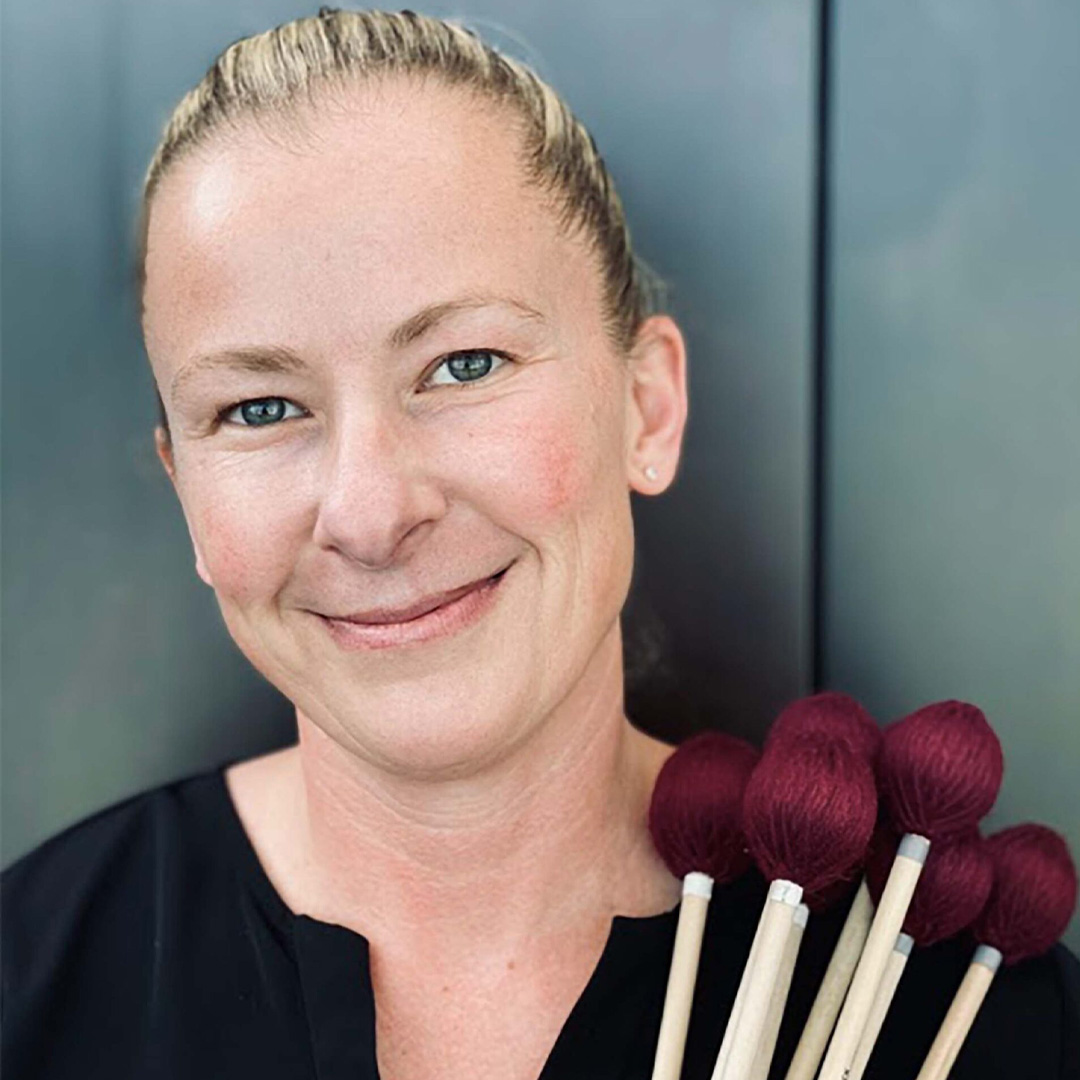
Sandi Rennick’s induction into the DCI Hall of Fame celebrates a career defined by virtuosic performance and a revolutionary approach to front ensemble design. A pioneer who transitioned seamlessly from the concert hall to the drum corps sideline, Rennick has spent nearly three decades redefining the sonic footprint of the modern percussion ensemble.
As a performer, Rennick is widely respected for her expressive musicianship and refined technique. She was the first and only female percussionist in the original cast of the Tony and Emmy award-winning hit Broadway musical “BLAST!” (1999–2000) and served as a featured marimba soloist for the show’s first U.S. National Tour (2003). Sandi was an adjunct professor of percussion at East Texas A&M University–Commerce from 2018 to 2024 and has served in the same role at the University of North Texas since 2019.
Her skill as a designer has earned Sandi the respect of colleagues and competitors alike. “The front ensembles that she has designed and taught with always have a fresh, creative sound,” said DCI Hall of Fame member and Blue Devils percussion head Scott Johnson. “They are always pushing the envelope on what the future could look like in our activity and bringing that vision and sound into the present.”
Rennick’s track record with the DCI ensembles she has worked with is impressive. “We often measure excellence through competitive success,” says DCI Hall of Fame judge Jay Kennedy. “In Sandi’s 28 years of writing, which includes the past 24 years for two different concurrent DCI finalist corps, she is a nine-time winner of the DCI Fred Sanford Award for Best Percussion Performance (with Santa Clara Vanguard and Phantom Regiment). There are only a handful of other individuals in that elite category.”
Rennick has served on the design staff for the Santa Clara Vanguard for more than 15 years and has been with the Troopers since 2013. Previously, she worked with Phantom Regiment (2003-2010) and Carolina Crown (1998-2004). In addition to her solo achievements, her professional partnership with her husband, Paul, has created one of the most formidable design duos in history — combining master-class battery percussion writing with her sophisticated front ensemble textures.
In his nomination letter, Hall of Fame member Bob Morrison highlighted Rennick’s pioneering role in marching music: “Sandi has fundamentally transformed the role of the front ensemble within the drum corps and marching arts. Building on its early development, she helped usher in a new era through the integration of amplification, electronics, new percussion techniques, and a distinctive compositional voice.”
While Rennick’s compositional craft and musical imagination are impressive, DCI Hall of Fame member Michael Gaines notes there is something more: “Her influence is undeniable, not only through the excellence and artistry of her work, but through the way she leads with humility, care, and purpose. That humanity, along with her innovation and creativity, is a large part of why her impact has been so meaningful to so many.”
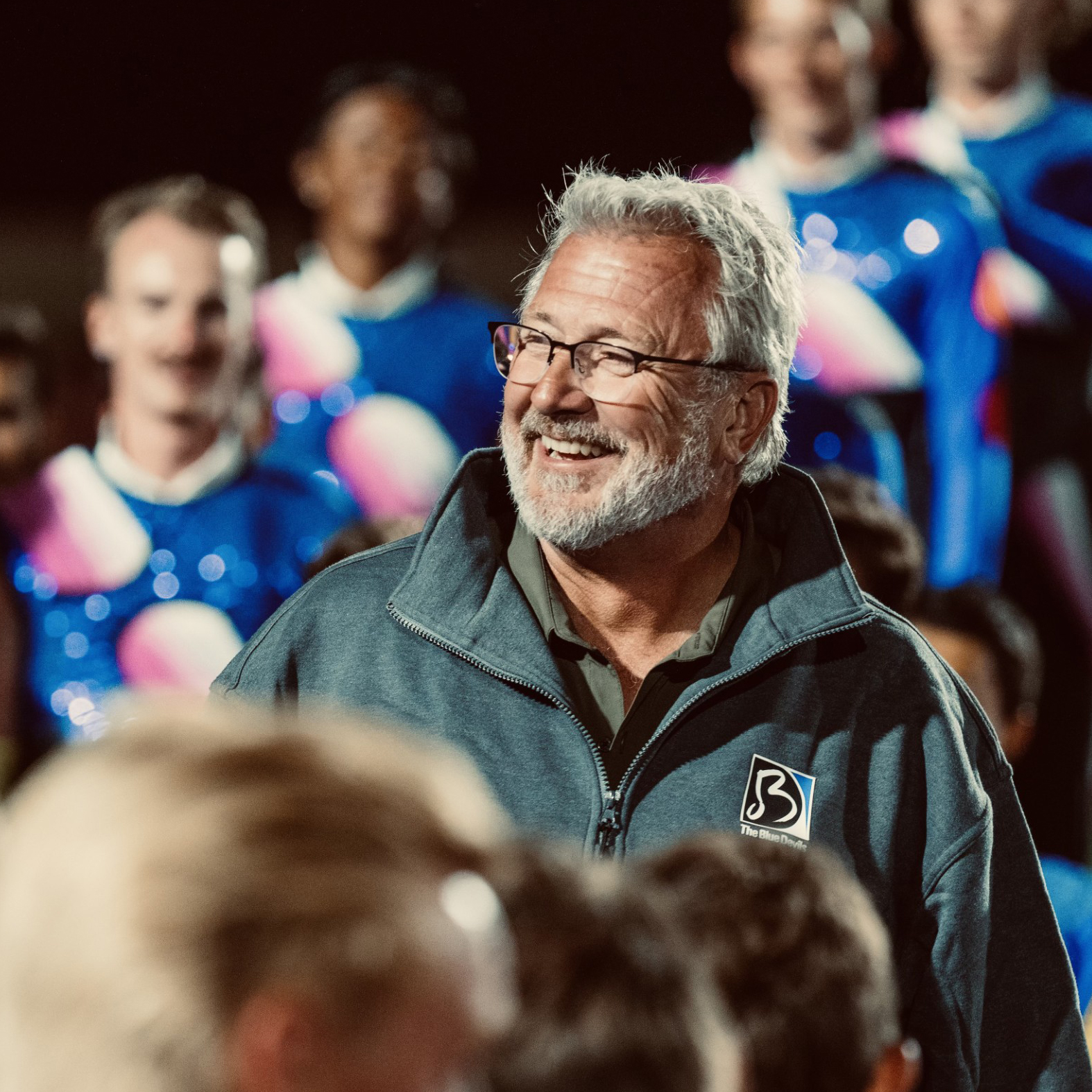
Patrick Seidling
Who would have thought that the wee lad who started out banging on a drum in 1973 with the Sundowner Kadets in Eau Claire, Wisconsin would one day be in the DCI Hall of Fame? Patrick Seidling would finish his marching days with the Madison Scouts before embarking upon an instructional and corps management tenure that has spanned decades.
Seidling served as the percussion caption head for Pioneer from 1991 to 1995 and then moved on to the staff of the Madison Scouts. It was there that his skill set blossomed and his duties with corps administration expanded as tour manager. He helped launch the Capital Sound in Madison. Then came the Scouts new management relationship with Southwind in Alabama. “(Pat’s) service to the Madison organization included significant leadership positions with the Scouts and as director of Southwind, where he demonstrated a rare ability to build programs grounded in strong culture and student-centered values,” says Madison Scouts executive director Chris Komnick.
Seidling’s colleagues across the activity also took notice, electing him to the DCI board of directors from 1998 through 2006. Phantom Regiment came calling in 2001, naming Seidling tour director and then corps director. His impact with the Rockford, Illinois corps was immediately felt. In 2003 Seidling received the Dr. Bernard Baggs Leadership Award recognizing DCI’s director of the year. “Everywhere Pat has been, he has delivered what was needed at that place, at that time,” says Hall of Fame member and former Colts director Greg Orwoll. “At each stop, he created growth, stability and success. Each destination needed something different, and he had the ability to discover what it was, and had the knowledge and ability to provide it.”
Seidling moved to California in 2007. It didn’t take long for the Blue Devils to recognize his talent. He started out as a “roadie” with the corps. Tour director Pete Emmons knew he found his guy. “This is when I first had the opportunity to see that Pat was a special person and was a perfect fit for the Blue Devils culture,” Emmons said. “Observing his logistical contributions and his passion for the Blue Devils members and the participants in the System Blue (educational) events he managed, I knew he would be a perfect replacement for me when I decided to ‘age out.’”
Seidling served as the “A” corps manager for the Blue Devils until 2024, a role he took on in 2014 after serving as System Blue educational events manager starting in 2009. He now assists with the corps where needed and manages the organization’s international events. The Blue Devils have won six DCI World Championships during Seidling’s tenure.
David Gibbs, longtime executive director of the Blue Devils and DCI Hall of Fame member sums up Pat’s career this way: “Longevity in this activity is admirable, but longevity with standard-setting impact with your talent contribution, passion for the activity, and true love for the mission of making the performer experience positive and life changing is rare. And one of those rare souls is Pat Seidling.”