Dead ends, hidden treasures, and a secret knowledge that leads to ultimate doom. It sounds like the script of a Hollywood blockbuster, but it’s actually the blueprint for The Battalion’s 2026 production, “In Search Of.”
The Salt Lake City Open Class corps is set to follow similar themes from the organization’s past, something fans have come to expect from The Battalion in recent years. After tackling the rise and fall of the 16th century Spanish Armada in 2024’s “Dead Reckoning,” and Norse mythology in 2025, the corps will once again stir up some historical drama as they set off on the 2026 DCI Tour.
“I’m no history buff or anything, but I certainly do like a good story. And especially if it includes a great legend that you can play off of,” The Battalion program director Brian Ellis said.
That great legend in 2026 will be a story centered on the Knights Templar, the 12th century military order founded to protect Christian pilgrims in the Holy Land. While the 2026 production’s title is intentionally left open-ended to an extent, Ellis says that the show will be focused on the Knights Templar’s search for unknown treasures and eventual downfall.
“Some might watch the “Da Vinci Code” and think that we’re in search of the Holy Grail, but it’s a theme that could go in a lot of different directions,” Ellis said. “The arc of our story is that the Templars are being pulled into the temple to dig for a treasure. They find this treasure and then that treasure becomes their hidden knowledge which ultimately becomes the demise of the order.”
Ellis explained that the show’s structure will play out like a cinematic, act based narrative by establishing its primary characters and taking them on a complete arc through the production. The Battalion aims to achieve this effect not only in its visuals but also with musical intentionality.
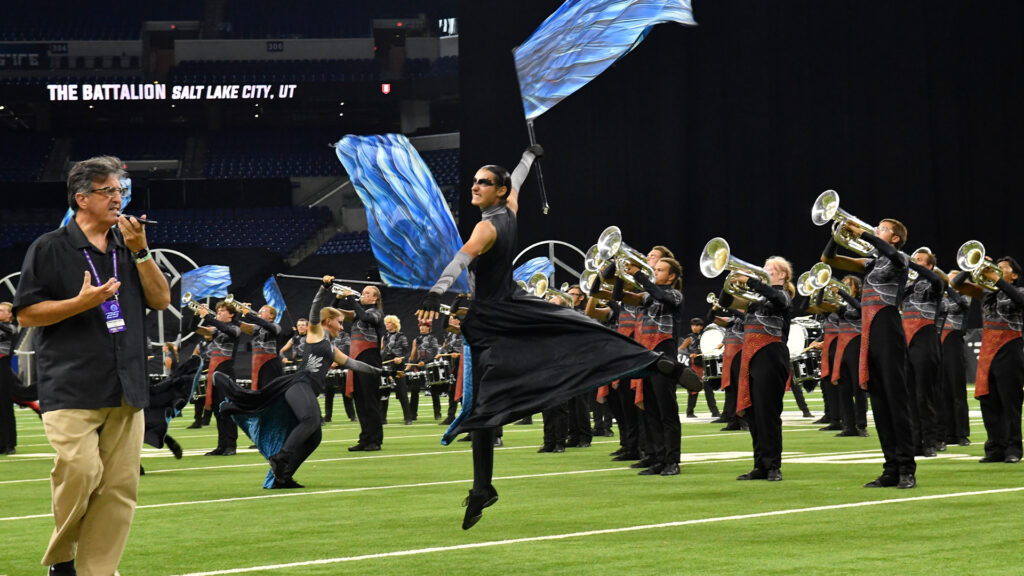
The show opens with Samuel Barber’s “First Essay for Orchestra,” his first of two featured pieces in this year’s show, that will set an immediate tone of mystery and moodiness for the “opening credits.” The somewhat unsettling nature of the composition may draw the audience, much like the knights themselves, into the temple’s secrets and foreshadow their ultimate fate.
“We’re identifying the knight’s character both through soundscape, the mood of our music that we’re playing, and through our visual ideas. We’ve created a pretty large temple symbolically, anyways, on the field,” Ellis said. “We’ve got this kind of unearthly wisdom, our Sophia character, which is played by our color guard, is kind of drawing the knights in to come find this hidden truth, this hidden treasure.”
This eerie beginning will transition into the second movement’s rising action, scored to “On the Waterfront” by Leonard Bernstein. Ellis says that this choice takes a more explorative approach with present danger as the knights enter and move through the temple’s maze-like corridors, searching for something beyond their wildest dreams.
“We’re on a treasure hunt, right? We think we’re on the right path, but there are dead ends, and then we have to go to another path,” Ellis said. “‘On The Waterfront’ is a ton of fun. It’s very aggressive and it just fits us really well.”
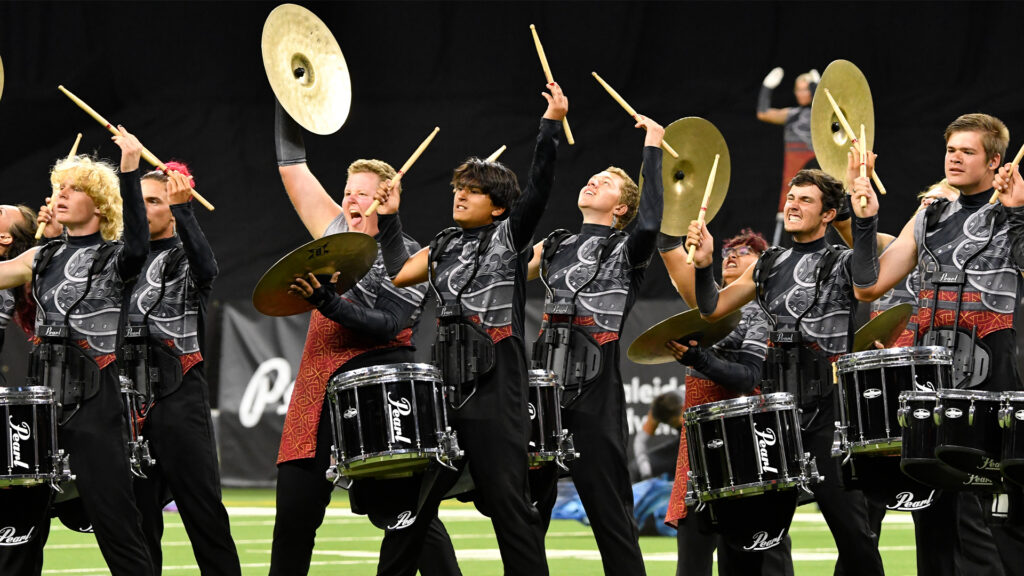
Ellis says that the third movement of the production will center on finding the treasure, and once the Knights finally reach what they were looking for, the show reaches a triumphant climax by way of another Barber piece, his “First Symphony Op. 9: d. (Andante Tranquilo).”
“I think that will be our big moment there,” Ellis said. “That one is just a glorious, beautiful, highly emotional piece of music. It’s going to be a pretty big challenge for the performers, but we’re looking forward to putting that out there.”
At this point in the production, The Battalion will offer the audience some relative peacefulness in the ecstasy of discovery. However, Ellis says that dramatic undertones will continue to build underneath the moment of supposed victory.
The show will close with a fourth movement set to Bela Bartok’s “Music For Strings, Percussion and Celesta Sz. 106 (Allegro)” and a return to Barber’s “First Symphony” to end it. The choice of Bartok moving into Barber drives the sense of dread right back up, depicting the methodical, tragic and crumbling nature of the order after the moment of discovery.
“A big question that the design team kept running around a lot in our ideas for the fourth movement is what would you do if you knew a profound truth? What would you do to protect that profound truth,” Ellis said.
Ultimately Ellis says that he is excited about the ability of the musical selections to drive the storyline in and of themselves.
“I think our uniqueness will be found in how we present this musical material,” Ellis said. “It’ll all be aesthetically very recognizable to audiences, but I think it’ll be presented in a little different way,” Ellis said. “It’s about our story, and it’s about taking these recognizable tunes and molding them to be a totally different story than what we’re used to.”
Members of The Battalion will make the performance debut of “In Search Of” at Drums Along Columbia in Kennewick, Washington on June 29.