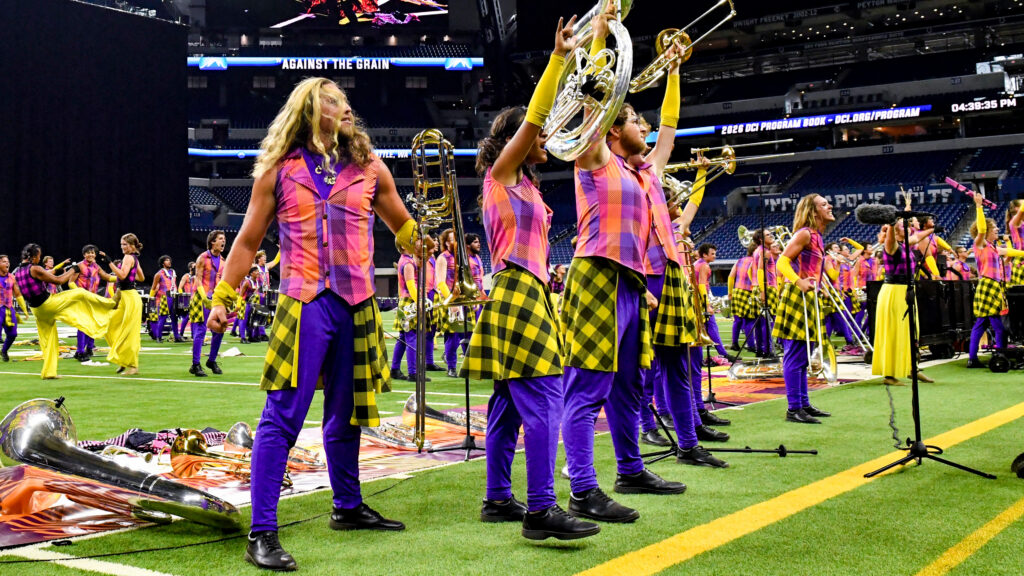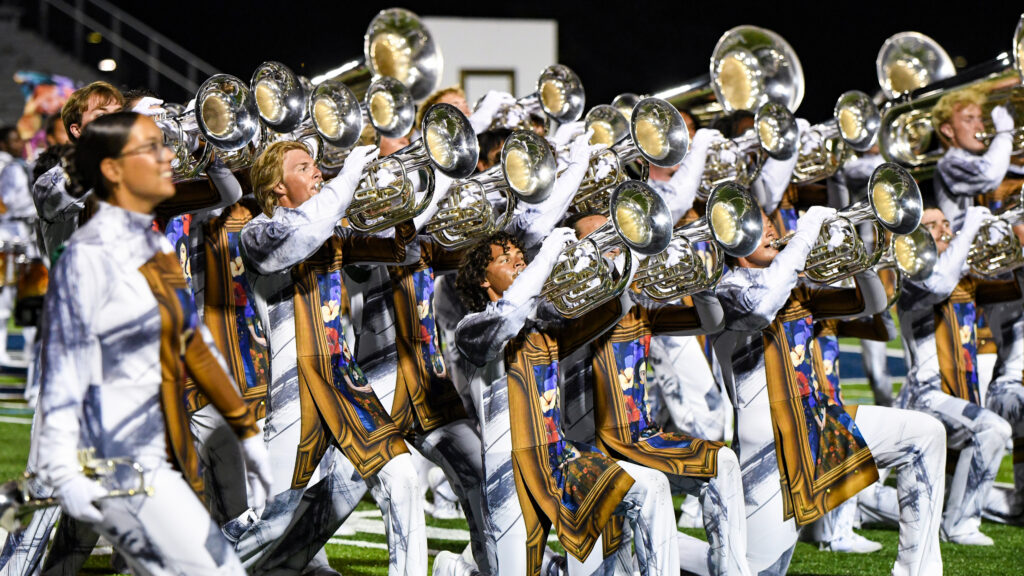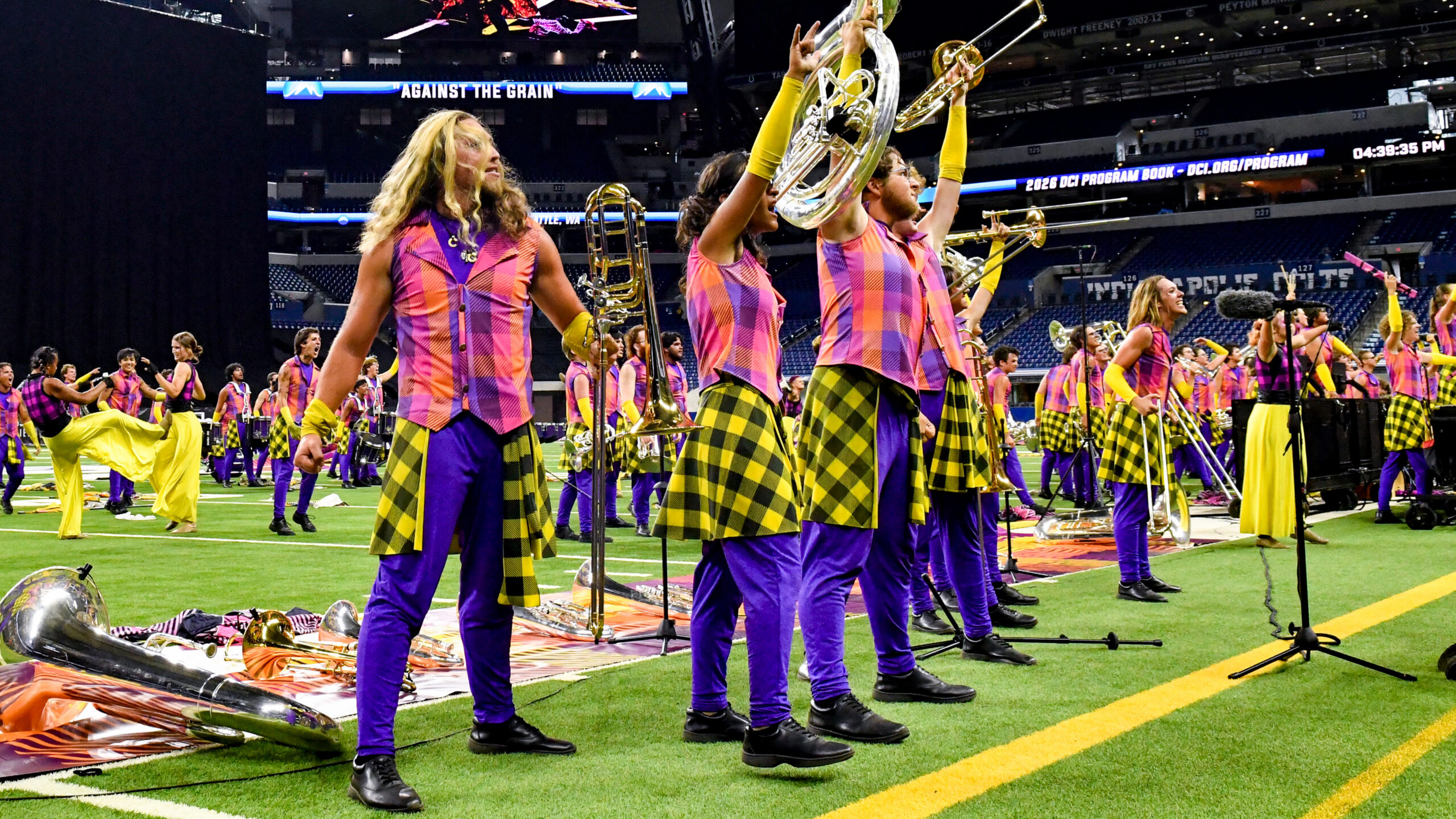
According to newly-installed program coordinator and brass arranger Todd Zimbelman, the Seattle Cascades design team’s work on the corps’ yet-to-be-revealed 2027 production is already well underway.
One of the most interesting wrinkles of that design is the corps’ recruitment of a 12-person trombone section. Since the allowance of the instrument by way of a DCI rule change more than a decade ago, full-time trombone sections remain somewhat of an oddity in the drum corps activity; typically reserved for solos or short feature moments, with low brass players otherwise doubling on baritone or euphonium.
“The timbre of a trombone you just can’t emulate with the baritone section,” Zimbelman said. “This is not getting rid of the baritone section. We’re still going to have just as many baritones as we normally have. We just want to add 12 trombones to the mix for a slide effect, but also mainly for the timbre.”
“When you hear the New York Phil or the Chicago Symphony, there’s a bite to the front of the brass section you cannot get with conical-bore instruments,” Zimbelman continued. “It still sounds beautiful and warm and powerful, but there’s a little bit more of a frontal articulation, there’s a little bit more response.”
Zimbelman noted that the idea wasn’t a gimmick or a ploy to stand out, but rather a choice driven by this year’s musical score. He said the corps’ 2027 production features music that relies heavily on changing pitches slowly over time and glissandos. Because that technique permeates nearly the entire show, recruiting a full-time trombone section and composing independent parts — rather than simply doubling the baritones — made sense from a design perspective.
However, visual considerations were just as important as the music before pulling the trigger. Zimbelman sought the buy-in of the corps’ drill designer early on to ensure the concept would translate to the field.
“You’re always going to have to be careful with spacing and staging with trombones,” Zimbelman said. “Our drill writer thinks of the drill process as a unification of all the elements on the field. It’s definitely going to play into the spatial relationships … there are parts where it’s just trombones, so at times he’s going to have to keep them together when normally he would mix up some instrumentation for a certain move. We discussed things quite a bit before making the decision.”
Zimbelman returns to the Seattle Cascades design team after previously working with the corps in the early 2000s, alongside a past tenure with the Oregon Crusaders during their transition from DCI’s Open Class to World Class. For the upcoming season, his primary focus isn’t competitive placement, but rather fostering a positive, growth-oriented culture for the performers.
“The focus is on putting together a great show, teaching the students how to do it really well, treating the kids really well, taking care of their health, and sending them back to their home programs as better players and better humans,” Zimbelman said. “If you start with that student-focused premise, I think the rest of it takes care of itself.”
Despite being early in the offseason, the Seattle Cascades are fairly far along in their 2027 show design process. Zimbelman laid the groundwork early, completing the initial draft of the full music book, show title, and thematic concepts by late August. This rapid timeline aligns with his design philosophy: getting a complete framework down early so the team can spend time refining the material, layering in percussion, sound design, and visual elements, and organically elevating the production. With the full draft established, the Cascades design team can now work to fine-tune the show’s pacing and effects. Brass members have already received music for the first two movements to prepare ahead of the corps’ opening audition camp November 20-22 in the Portland area.
“We’re trying to get out of the starting gate as quick as we can with some really challenging content this year,” Zimbelman says. “In the writing and in the performance, our goal is just to make them better, have a good time, and grow.”